An arborist is a trained professional who diagnoses and manages tree health, pruning, planting, and risk assessment. This person works with diagnostic tools, climbing gear, even soil analysis to nurture green assets. The role of an arborist will be explored in this piece with practical guidance and insight. According to the International Society of Arboriculture (ISA), more than 35,000 certified arborists work worldwide, underscoring the growing recognition of arboriculture as a specialized profession.
- Trained experts handling tree lifecycles
- Specialists in pruning, planting, evaluating risks
- Professionals working to preserve urban forestry
What does an arborist mean
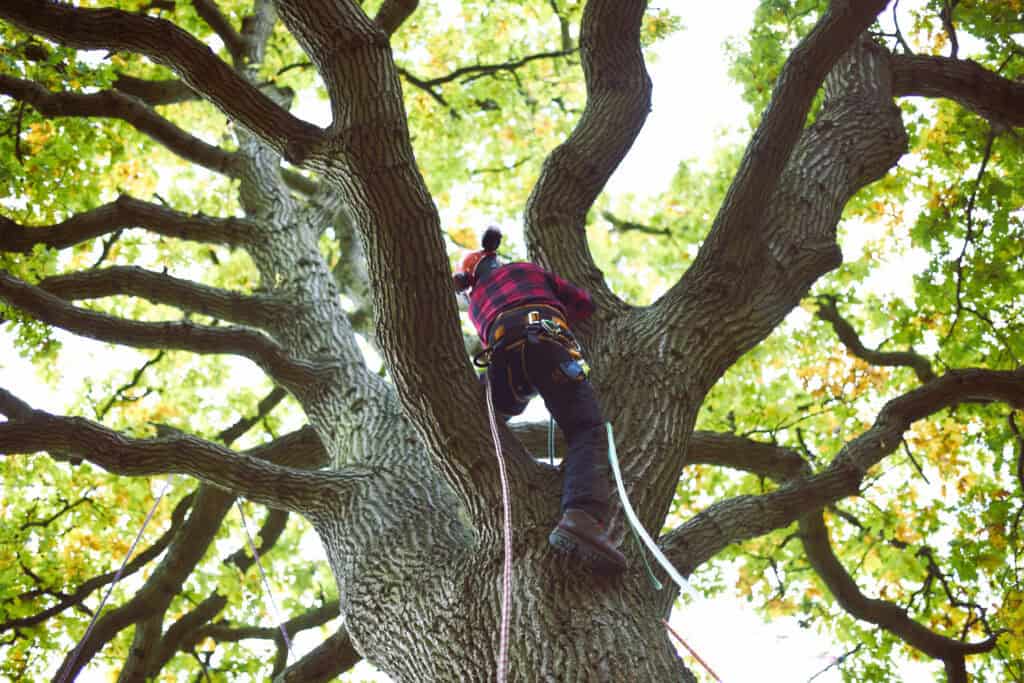
Someone recalled a job where a certified arborist climbed a towering oak to prune damaged limbs expertly and safely, showing years of practice that came from certifications and field hours. This example shows how solid training matters and how hands‑on tasks become second nature over time. Effective work flows from combining formal instruction and street‑level experience, creating safer outcomes. People who’ve seen crews in action trust that depth of expertise makes a real difference.
- Certifications require minimum experience and exams
- Experience often spans chainsaw skills, diagnosis, safety
- Hands‑on practice builds confidence and judgment
Arborist tree services explained
Maintenance of trees includes trimming for structure, removal of deadwood and assessing soil conditions, and that work comes from detailed protocols. Studies show over 3 billion urban trees in the U.S. provide $2.4 trillion in ecosystem services annually. Municipal programs might inventory street trees each year at a rate of one‑fifth of all trees. Good tree service goes beyond aesthetics and targets long‑term health.
- Pruning to reduce hazards and deadwood
- Soil assessment promoting healthy root systems
- Inventory management for public tree populations
Why hire an arborist
People who hire trained arborists gain insight into risk assessment that non‑specialists can’t match, and statistics back that tree‑care hazards are often fatal without proper protocols. Arborists follow ANSI and OSHA standards to keep workers safe and trees healthy. When a professional evaluates structural weaknesses, the outcome is better decisions about removals or treatments. That expertise prevents accidents and preserves urban canopy value.
- Certified pros assess safety and structural risk
- Fewer injuries when standards are followed
- Tree health preserved through proper diagnosis

Tree Risk Assessment Process
Safety evaluations of trees involve looking for decay, cracks, cavities, root damage, weakened branch attachments, and changes in the surrounding soil. Certified arborists use structured risk-assessment methods to evaluate the likelihood of tree or branch failure and determine appropriate mitigation. OSHA recommends having a qualified arborist survey the worksite and identify hazards related to tree structure before tree-care work begins, including conditions that could create falling-object or fall hazards. That systematic approach helps crews determine whether pruning, support systems, monitoring, or removal may be appropriate while improving safety on the ground and aloft.
- Examine trunk integrity, root health, and crown condition
- Use standardized tree-risk assessment methods
- Plan pruning, bracing, monitoring, or removal based on the level of risk
- Evaluate the surrounding worksite for structural and falling-object hazards before tree-care operations begin
Tools arborists use daily
Work in tree canopy demands climbing ropes, pruning saws, aerial lifts, soil probes, safety helmets, eye protection and sometimes electronic testers for root‑zone moisture. OSHA emphasizes that protective equipment and training prevent many injuries. Diagnostic tools like resistographs let pros pinpoint decay without felling trees. Proper gear and tech combine to support careful interventions.
- Climbing gear, harnesses and PPE for safety
- Soil probes and moisture meters for root checks
- Diagnostic tools for detecting internal decay
Tree Climbing Arborist Work
Climbing into tree crowns demands physical stamina, rope-technique mastery, and constant situational awareness to avoid falls, falling branches, and electrical hazards. OSHA identifies falls and struck-by incidents as major hazards during tree-care operations. The agency also instructs workers to inspect tree limbs for strength and stability before climbing and requires appropriate fall protection for tree trimmers working aloft. OSHA guidance further recommends that climbing arborists receive training in climbing techniques and use a second means of fall protection, such as a work-positioning lanyard or second climbing line, in addition to the primary arborist climbing line. Every action aloft reflects both practiced skill and disciplined attention to safety.
- Rope-access skills for high-canopy work
- Fall-protection procedures guided by ANSI Z133
- Climbing builds strength and situational response
- Tree limbs and potential anchor points should be evaluated for strength and stability before an arborist begins climbing
Difference Between Arborist and Landscaper
Tree care professionals study biology, pathology, soil science, and safety regulations deeply, while landscapers focus more on planting ornamentals, garden design, and mowing tasks. Pruning cuts made by untrained workers can harm trees or worsen decay. Arborists follow urban forestry research showing typical annual mortality in city tree populations ranges from about 2.8% to 6.5% (Source: USDA Forest Service). That training leads to preservation rather than damage. The Tree Care Industry Association notes that tree-care employers have at least 15 times the fatality rate of all industries, underscoring the higher risk and the advanced training required for certified arborists. Arborists are also required to follow the ANSI A300 industry standard of care for pruning, root management, and risk mitigation. TCIA Arborist Standards — ANSI A300
- Arborists are certified with specialized education and field hours
- Landscapers often lack deep knowledge of tree biology
- Wrong cuts can cause long-term decay and structural weakness
Urban Arborist Responsibilities
City-employed arborists maintain tree inventories, inspect risk, manage planting programs, and collaborate with engineers or planners on tree-site coordination. Research suggests annual mortality rates of 3.5%–5.1% in urban settings demand constant, proactive care. Urban arborists juggle public safety, infrastructure conflicts, ecosystem-service targets, climate goals, and community engagement. The Tree Care Industry Association reports that tree work remains one of the most dangerous professions in the U.S., highlighting the importance of certified training and safety protocols for arborists performing emergency storm response, climbing operations, or removals. TCIA — Tree Worker Safety Information
- Perform street-tree inventories and continuous health monitoring
- Coordinate planting projects with urban planning teams
- Respond to storm damage and emergency hazard removals
Hiring a Local Arborist
Choosing certified professionals means verifying ISA or municipal qualifications, reviewing safety documentation, and checking for insurance coverage. OSHA reports that a lack of safety oversight causes a significant number of preventable industry incidents each year. Certified arborists may provide site-specific plans, equipment lists, risk rating reports, and compliance-driven cost estimates. TCIA also states that companies following ANSI A300 standards must include written risk assessments and documented equipment maintenance, giving homeowners confidence in professional accountability and work quality. TCIA — Industry Care Standards
- Check credentials such as ISA certification and continuing education
- Ask for documented safety programs and equipment inspections
- Review service scopes tied to risk-rating metrics and canopy goals
Expert Tree Care
Arborists provide more than pruning, they deliver scientific diagnosis, risk-management expertise, ecological insight, and long-term planning. They operate under standards that protect both workers and community assets, keeping trees structurally sound, safe, and thriving for years. Every facet of tree care, from climbing systems to canopy hazard evaluation, rests on national best practices and ongoing forestry research. Arborists translate that knowledge into proactive solutions that reduce accidents and maintain the value of public and private trees. TCIA — National Arborist Standards
- Strategic cuts and removals reduce risk instead of reacting to it
- Diagnostic tools and soil care support healthier root structures
- Expertise matters in balancing risk mitigation with ecosystem benefits

Key Takeaways for What is an Arborist
- Tree care beyond trimming: diagnosis, soil work, canopy risk checks
- Certifications tied to safety standards reduce fatalities and lost‐time injuries
- Urban tree mortality rates drive ongoing maintenance efforts
- Tools include rope systems, PPE, diagnostic tests and soil probes
- Professional knowledge saves trees from improper cuts or misdiagnosis
Frequently Asked Questions
- What training does a certified arborist have? Certification demands hours of study, practical experience and exam success. The ISA credential confirms knowledge of biology, safety and tree assessment.
- How often should trees be inspected by an arborist? Urban forest guidelines recommend annual or biennial checks for street trees to manage the 3–6 % annual mortality rate seen in many cities.
- Can an arborist make trees safer in storms? Yes, risk assessments and strategic pruning reduce limb‑fall risks during wind events; emergency response crews rely on certified judgments.
- Do arborists handle root zone issues? Soil diagnostics and root inspections are vital, and arborists use probes, combined with moisture monitors, to promote healthy root systems.
- How do arborists protect workers near power lines? Special line‑clearance tree trimmers follow OSHA 1910.269(r) rules, maintain safe distances (minimum 10 ft) and use insulated tools and PPE when working near energized conductors.
Precision Arborcare is your trusted arborist for expert tree services in Asheville, NC. Built on a passion for trees and a commitment to providing top-quality arborist care, our company excels in technical skills while prioritizing clear communication, customer satisfaction, and safety. Our team consists of certified arborists and tree care professionals dedicated to enhancing and preserving the natural beauty of your landscape. We pride ourselves on being approachable, friendly, and professional arborists, ensuring that our clients feel confident and informed throughout every step of their tree care journey. Precision Arborcare offers tailored arborist services to meet the specific needs of each client, from routine maintenance and emergency tree services to specialized care for your trees.