Trees add beauty, shade, and value to a property, but they can also pose risks if they’re unhealthy or unstable. Knowing how to identify hazardous trees can prevent accidents, save money, and ensure the safety of everyone around. Arborists often emphasize that tree hazards aren’t always obvious. Homeowners may overlook potential issues that could turn a seemingly healthy tree into a liability. Major tree mortality events, such as those caused by drought and bark beetle outbreaks, have significantly increased forest fuels and snag hazards, elevating the risk of falling trees. The U.S. Forest Service reports that falling trees and limbs are a leading cause of storm-related property damage nationwide, underscoring why hazard awareness is critical.
Learning to recognize hazardous trees means paying attention to subtle warning signs such as decline, structural defects, and external damage. With careful observation, homeowners can identify risks before they turn into serious dangers. Dead branches or hanging limbs often signal weakness, while cracks or splits in the trunk or major branches suggest structural failure. Trees that lean noticeably or show exposed roots can also indicate instability and a higher risk of falling. A professional tree service can inspect these warning signs more closely and recommend safe next steps before the tree becomes a threat to people or property.
1. Identifying Hazardous Trees Early
An experienced arborist once evaluated a large oak tree that had been standing in a homeowner’s yard for over 50 years. Though the tree appeared healthy at first glance, further inspection revealed deep cracks in the trunk and significant root damage. This tree posed a serious risk, and immediate action was necessary to avoid a dangerous situation. Many hazardous trees can look perfectly fine from a distance. Yet, issues like disease, pests, or environmental factors may be hiding underneath the surface. Identifying hazardous trees early allows property owners to prevent accidents.
- Trees that lean to one side suddenly
- Mushrooms or fungi growing at the base of the tree
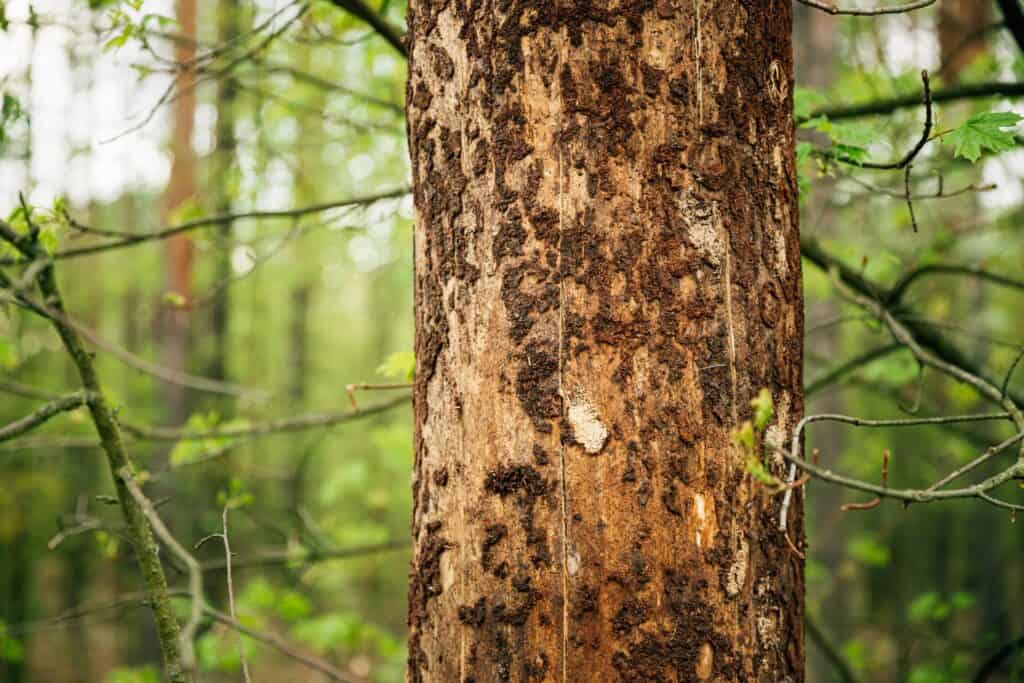
- Trees with large cavities or missing bark
2. Signs of Tree Health Decline
When a tree’s health begins to decline, there are often subtle signs that can help identify potential hazards. Trees may show symptoms of stress before structural problems become severe, giving homeowners an opportunity to seek professional evaluation. Arborists are trained to recognize patterns involving foliage, branches, bark, roots, and overall crown condition. University of Minnesota Extension notes that stressed trees may develop yellowing leaves, reduced leaf size, early leaf drop, and crown dieback, making changes in normal foliage and canopy growth useful warning signs to watch. Ignoring persistent symptoms can allow an underlying disease, pest problem, or environmental stress to progress.
- Yellowing leaves out of season
- Bare or dying branches during the growing season
- Unusual insect activity on or near the tree
- Early leaf drop or noticeably smaller leaves can indicate that a tree is under stress
3. Common Structural Defects in Trees
Structural defects are one of the biggest contributors to hazardous trees. A tree may have multiple trunks, deep cracks, or poor branch structure, all of which increase the risk of breakage. These defects are particularly dangerous because they can cause parts of the tree to fall unexpectedly. Arborists will often point out that defects like co-dominant stems or weak branch unions are common, especially in older trees or fast-growing species. Structural issues need to be addressed to prevent branches or even the entire tree from falling.
- Multiple trunks growing from the same point
- Branches that grow closely together, forming a “V” shape
- Large cracks or seams along the trunk
4. Inspect Trees for Damage
Inspecting a tree for damage involves a close look at its trunk, branches, roots, and surrounding soil. While the average person might focus only on the leaves or overall shape of the tree, an arborist looks deeper for cracks, cavities, decay, damaged roots, unusual leaning, and pest activity. The U.S. Forest Service explains that even a basic tree risk assessment can identify warning signs such as dead trees, heartwood decay, leaning, and root damage. Many structural hazards become easier to recognize once homeowners know what to watch for, although questionable trees should receive a professional evaluation.
- Look for sawdust or wood shavings near the base that may indicate insect activity
- Watch for cavities, soft wood, or visible decay rather than relying only on tapping the trunk
- Examine the ground around the roots for signs of uplift or soil movement
- Check for new or increasing lean, especially when accompanied by disturbed soil
- Look for cracked, hanging, or dead branches that could indicate structural weakness

5. Why Tree Location Matters for Safety
The placement of a tree can greatly impact its potential hazard level. A tree that’s leaning over a house, power line, or driveway poses a much higher risk than one in an open field. An arborist will always take the tree’s location into account when assessing hazards. Trees near sidewalks, roads, or structures may require more frequent inspections. A tree’s location often determines how much damage it could cause if it were to fail.
- Trees near homes, power lines, or busy roads
- Roots growing into foundations or sidewalks
- Trees that block sightlines on streets or driveways
6. Tree Species and Hazard Potential
Different tree species have varying levels of hazard potential. Some species are more prone to branch failure, storm damage, or disease, while others may tolerate certain environmental stresses more effectively. Arborists consider species characteristics alongside tree age, health, structure, location, and weather exposure when evaluating potential hazards. The U.S. Forest Service describes black willow as a weak tree that is especially prone to breakage, demonstrating why species-specific characteristics matter during a tree risk assessment. Understanding the species can provide valuable insight into the type of damage an arborist should watch for.
- Some species, including black willow, are naturally more prone to branch breakage.
- Certain species are more susceptible to diseases such as Dutch elm disease.
- Fast-growing trees may develop structural characteristics that require closer monitoring.
- Species, crown structure, tree age, and site conditions can all influence susceptibility to storm damage.

7. The Importance of Professional Tree Inspections
Hiring a professional arborist to inspect trees is the safest and most reliable way to identify hazards. While property owners can look for obvious signs of distress, an arborist has the training and tools to perform a thorough risk assessment. Professional tree inspections not only catch current hazards but also anticipate future risks. Homeowners should make regular tree inspections part of their property maintenance routine. A professional’s insight ensures that no potential hazards are missed.
- Arborists have specialized equipment for inspecting trees
- Professional assessments often catch issues early
- Certified arborists provide reliable advice for tree care
When to Consult an Arborist for Tree Risk
Not all tree risks are obvious, and knowing when to call an arborist can make all the difference in maintaining a safe environment. If a tree shows signs of instability, it’s always better to consult an arborist sooner rather than later. Early intervention can prevent injuries and save property from damage. An arborist can evaluate whether a tree can be saved with pruning or other interventions or whether it should be removed entirely. Knowing when to consult an expert can save time, money, and even lives.
- Call an arborist if the tree is leaning suddenly
- If there’s visible damage after a storm, consult a professional
- Unusual root exposure or cracking should be inspected immediately
How to Prevent Tree Hazards in Your Yard
Proactive measures can greatly reduce the risk of hazardous trees on a property. Regular maintenance, pruning, and monitoring are key to helping trees remain healthy and structurally sound. Homeowners can take action to prevent potential hazards by working with an arborist on a maintenance plan. U.S. Forest Service guidance states that dead trees are among the trees most likely to fail, particularly when people, buildings, roads, or other potential targets are nearby. The Forest Service also recommends pruning dead and dying branches as part of maintaining safer, healthier trees. Preventive care makes it easier to address developing weaknesses before a tree or branch becomes a more serious threat.
- Regularly prune dead or damaged branches
- Inspect trees after storms for signs of damage
- Maintain appropriate watering and fertilizing schedules to support tree health
- Prioritize professional evaluation of dead trees located near homes, driveways, sidewalks, or other frequently used areas
- Remove dead or dying branches before deterioration increases their potential to become falling hazards

Key Takeaways for Identifying Hazardous Trees
- Trees can become hazardous due to structural defects, disease, or external damage
- Regular inspections and maintenance are essential for preventing tree hazards
- Professional arborists have the expertise to identify and mitigate tree risks
Frequently Asked Questions About Identifying Hazardous Trees
What are the most common signs of a hazardous tree? Cracks in the trunk, dead branches, leaning, and fungal growth near the base are common indicators of a hazardous tree.
How often should trees be inspected for hazards? It’s recommended to inspect trees annually or after major weather events to catch early signs of distress.
Can a hazardous tree be saved, or does it need to be removed? Depending on the severity of the damage, some hazardous trees can be saved with pruning or bracing, but others may require removal.
What should I do if I suspect my tree is a hazard? Consult a professional arborist immediately for a thorough inspection and guidance on the next steps.
How do weather conditions affect tree hazards? High winds, heavy rain, and ice can weaken tree structures, increasing the likelihood of breakage or uprooting. Regular inspections after storms are crucial.
Precision Arborcare is your trusted arborist for expert tree services in Asheville, NC. Built on a passion for trees and a commitment to providing top-quality arborist care, our company excels in technical skills while prioritizing clear communication, customer satisfaction, and safety. Our team consists of certified arborists and tree care professionals dedicated to enhancing and preserving the natural beauty of your landscape. We pride ourselves on being approachable, friendly, and professional arborists, ensuring that our clients feel confident and informed throughout every step of their tree care journey. Precision Arborcare offers tailored arborist services to meet the specific needs of each client, from routine maintenance and emergency tree services to specialized care for your trees.